Attachment styles
The four patterns people carry from early bonds into adult relationships.
1 min read
Reviewed by Shariq Refai, MD, MBA, FAPA. Verify: ORCID, Wikidata, NPI Registry, all links.
Attachment styles are patterns of expecting, seeking, and responding to closeness. They form early, from thousands of small interactions with caregivers, and they follow us into adult relationships as defaults, not destinies. Knowing your default is the first step to choosing differently under stress.
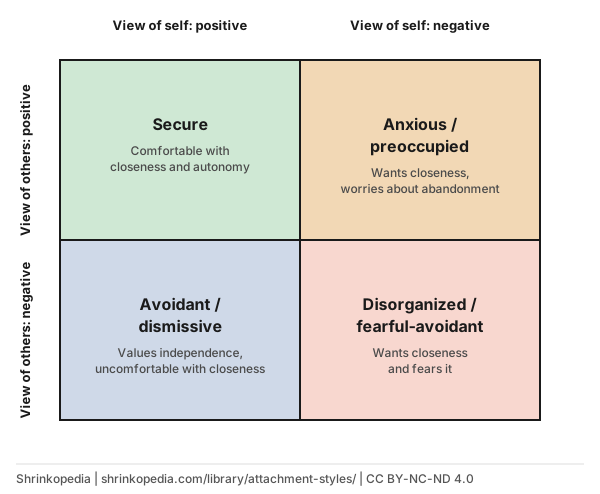
The four styles
Secure
Comfortable with closeness and with space. Can ask for help, tolerate conflict, and trust that the relationship survives disagreement. Roughly half of adults land here.
Anxious, sometimes called preoccupied
Closeness feels urgent and fragile. Small signals get read as rejection, reassurance helps briefly, and the fear of being left can crowd out everything else.
Avoidant, sometimes called dismissive
Independence feels safe and need feels risky. Intimacy gets managed with distance, self reliance, and changing the subject. Feelings are there, but kept off the table.
Disorganized, sometimes called fearful avoidant
Closeness is both craved and frightening, often after frightening or chaotic caregiving. Push and pull, come here and go away, sometimes in the same conversation.
Styles are strategies, not flaws
Each insecure style was a smart adaptation to a real environment. Anxious pursuit and avoidant distance both worked, once. The question is whether they still fit.
Earned security
Styles can change. Long safe relationships, therapy, and repeated experiences of rupture followed by repair move people toward security at any age.
How to use this page
- Notice what you do under relationship stress: pursue, withdraw, or both. That is your default talking.
- Tell the people close to you what your pattern is. Named patterns are easier to interrupt.
- If two insecure styles are clashing, the pattern is the problem, not either person.
Worth knowing
Attachment style is not a diagnosis and online quizzes are rough estimates at best. Most people show different patterns in different relationships and shift along the spectrum over a lifetime. Treat the labels as a vocabulary for noticing, not a box to live in.
Based on attachment theory developed by John Bowlby and Mary Ainsworth, extended to adult relationships by Cindy Hazan and Phillip Shaver.
How to cite this page
- Short
Attachment styles. Shrinkopedia, medically reviewed by Shariq Refai, MD, MBA. https://shrinkopedia.com/library/attachment-styles/- APA
Shrinkopedia. (n.d.). Attachment styles. Medically reviewed by Shariq Refai, MD, MBA. https://shrinkopedia.com/library/attachment-styles/- MLA
"Attachment styles." Shrinkopedia, https://shrinkopedia.com/library/attachment-styles/.
Click a citation to select it.