Burnout
The three dimensions of burnout and the six mismatches that drive it.
2 min read
Reviewed by Shariq Refai, MD, MBA, FAPA. Verify: ORCID, Wikidata, NPI Registry, all links.
Burnout is a response to prolonged workplace stress that has not been successfully managed. It is not a character issue and it is not fixed by a weekend off. Research describes three dimensions, and understanding the mismatches behind them matters more than pushing through.
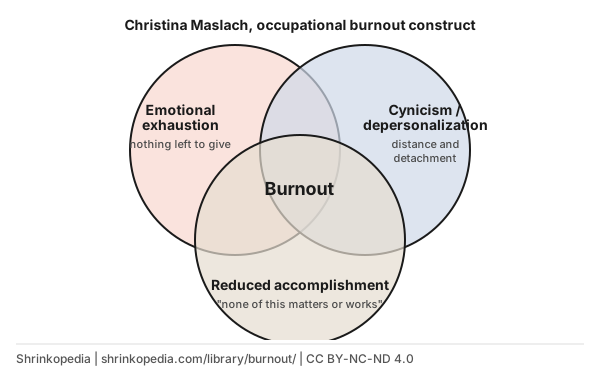
What burnout is made of
Dimension 1: exhaustion
Depleted energy that rest stops fixing. Tired at the start of the day, running on fumes by noon, nothing left for life outside work.
Dimension 2: cynicism and distance
Growing detachment from the work and the people in it. Caring curdles into irony. In caregiving fields this shows up as depersonalization, treating people like tasks.
Dimension 3: reduced sense of accomplishment
The feeling that nothing you do matters or lands. Effort keeps going up while the sense of impact keeps going down.
Burnout is not depression
They overlap and can coexist, but burnout is tied to a context, usually work, while depression colors everything. Burnout can also slide into depression if nothing changes. When in doubt, get assessed.
The six mismatches that drive it
Research points to mismatches between person and job in six areas: workload, control, reward, community, fairness, and values. More mismatches, higher risk.
Early signals
Sunday dread, snapping at small things, working longer while producing less, going quiet in meetings you used to care about, getting sick the moment you stop.
What actually helps
Fixing a mismatch beats managing its symptoms. Reduce load or increase control where possible, reconnect with people, and protect real recovery. If nothing about the situation can change, changing the situation is a valid answer.
How to use this page
- Score yourself honestly on the three dimensions. One alone is strain. All three together is burnout.
- Find your biggest mismatch among the six. That is the lever, and it is often more negotiable than it looks.
- If exhaustion persists no matter what you change, talk to a clinician and rule out depression and medical causes.
Worth knowing
The most common mistake with burnout is treating it as a personal resilience problem. Decades of research say it is primarily a relationship problem between a person and their working conditions. Self care helps you survive the situation. It rarely fixes the situation.
Based on the burnout research of Christina Maslach and colleagues. The World Health Organization classifies burnout as an occupational phenomenon in ICD-11.
How to cite this page
- Short
Burnout. Shrinkopedia, medically reviewed by Shariq Refai, MD, MBA. https://shrinkopedia.com/library/burnout/- APA
Shrinkopedia. (n.d.). Burnout. Medically reviewed by Shariq Refai, MD, MBA. https://shrinkopedia.com/library/burnout/- MLA
"Burnout." Shrinkopedia, https://shrinkopedia.com/library/burnout/.
Click a citation to select it.