Window of tolerance
The zone of arousal where you can think, feel, and respond at the same time.
1 min read
Reviewed by Shariq Refai, MD, MBA, FAPA. Verify: ORCID, Wikidata, NPI Registry, all links.
Your nervous system runs best inside a band of arousal called the window of tolerance. Inside it, you can feel emotions without being run by them. Stress, threat, and reminders of past experiences can push you above or below the window, and the goal is not to never leave it, but to notice and return.
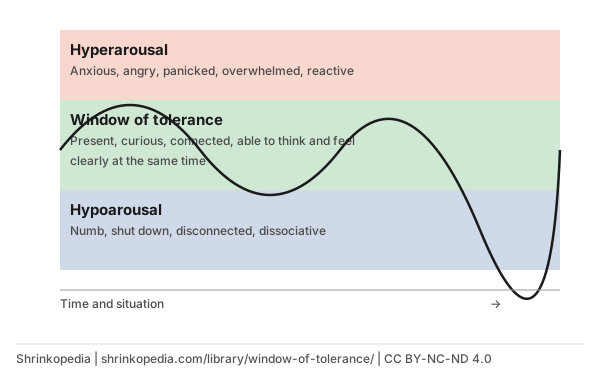
The three zones
Hyperarousal, above the window
The system is revved too high. Anxiety, anger, racing thoughts, a pounding heart, the urge to fight or flee. Thinking narrows to threat.
Inside the window
Alert but settled. You can feel strong emotions, stay present, weigh options, and connect with people. This is where learning and good decisions happen.
Hypoarousal, below the window
The system shuts down to cope. Numbness, fog, exhaustion, disconnection, feeling far away from your own life. It can look like laziness from the outside. It is not.
What narrows the window
Poor sleep, chronic stress, pain, substance use, and past trauma all shrink the band, so smaller triggers push you out faster.
What widens the window
Regular sleep, movement, safe relationships, therapy, and repeated practice noticing your state. The window grows with use, like a muscle.
Getting back inside
From above: slow long exhales, cold water, grounding through the senses. From below: gentle movement, warmth, contact with a safe person, naming five things you can see.
How to use this page
- Check in twice a day: am I above, below, or inside my window right now?
- Match the tool to the direction. Calming tools for hyperarousal, activating tools for hypoarousal.
- Leaving the window is not failure. Noticing it is the skill.
Worth knowing
People who grew up around unpredictability often have a narrower window as adults, not because anything is wrong with them, but because their alarm system was trained on a noisier environment. Widening the window is slow, repetitive, and very possible.
The window of tolerance concept was introduced by psychiatrist Daniel J. Siegel and is widely used in trauma informed therapy.
See also on ShrinkDaily
- ShrinkDaily's daily concept on window of tolerance
For a three-minute daily read on the same idea, see ShrinkDaily's daily concept on window of tolerance.
How to cite this page
- Short
Window of tolerance. Shrinkopedia, medically reviewed by Shariq Refai, MD, MBA. https://shrinkopedia.com/library/window-of-tolerance/- APA
Shrinkopedia. (n.d.). Window of tolerance. Medically reviewed by Shariq Refai, MD, MBA. https://shrinkopedia.com/library/window-of-tolerance/- MLA
"Window of tolerance." Shrinkopedia, https://shrinkopedia.com/library/window-of-tolerance/.
Click a citation to select it.